All posts
Why Students Lose Marks Even When They Answer the Assignment Question Correctly: Understanding University Marking Rubrics
Neha S · 12 Nov 2026 · 4 min read
Assignment writingAI detectionMistakes in assignmentmarkeing rubricabroad universities

Have you ever submitted an assignment feeling confident, only to receive a much lower grade than expected?
You answered the question, included relevant information and completed all the required sections. So, where did you lose marks?
The answer often lies in something students overlook: the university marking rubric.
Universities don't award marks simply for answering a question. They assess how well you demonstrate knowledge, analyse information, use evidence and meet the expectations of the assignment.
Let's understand how this works.
1. What Is a University Marking Rubric?
A marking rubric is a document that explains how your assignment will be evaluated.
It usually outlines the assessment criteria, their weightage and what is expected at different grade levels.
For example, your university might assess:
Understanding of the subject
Critical analysis and evaluation
Quality of research and evidence
Structure and organisation
Academic writing and referencing
Each criterion contributes to your final grade. This means that even if your answer is factually correct, you may lose marks if it doesn't meet the required academic standard.
2. Why Is a Correct Answer Not Enough?
One of the biggest mistakes students make is focusing only on answering the question instead of understanding what the question expects.
Consider this example:
Assignment question: Critically evaluate the impact of artificial intelligence on business operations.
A descriptive answer might explain how AI improves productivity, reduces costs and automates tasks.
A critical answer would go further. It would examine these benefits, discuss limitations such as implementation costs and data privacy, compare different perspectives and support arguments with credible research.
Both answers discuss AI, but the second demonstrates evaluation rather than simply describing information.
That difference can significantly affect your marks.
3. Understand the Instruction Words
Pay close attention to the action words used in your assignment question. They indicate the depth of response expected.
Describe: Explain the main features or characteristics of a topic.
Explain: Make an idea clear by providing reasons, details or examples.
Analyse: Break down information and examine relationships between different ideas.
Evaluate: Assess the strengths, weaknesses and overall value of an argument or concept.
Critically discuss: Present different perspectives, evaluate evidence and develop a reasoned argument.
Compare: Identify the similarities and differences between two or more concepts.
Misunderstanding these instructions can lead to an assignment that is relevant but doesn't fully answer the question.
4. Common Reasons Students Lose Marks
Even well-researched assignments can lose marks because of avoidable mistakes.
Too much description: Explaining concepts without analysing or evaluating them.
Ignoring the rubric: Spending too much time on low-weightage sections while neglecting important criteria.
Weak academic evidence: Making claims without credible academic sources.
Poor structure: Presenting ideas without a logical flow between paragraphs and sections.
Referencing mistakes: Incorrect citations or inconsistent referencing styles.
Not reviewing the work: Submitting without checking whether every assessment criterion has been addressed.
5. How to Use a Marking Rubric Before Submitting
Your marking rubric shouldn't just be something you read once before starting an assignment. Use it throughout the writing process.
Follow these five steps:
Read the rubric first: Understand what your professor will assess.
Identify high-weightage criteria: Give more attention to areas carrying more marks.
Match your content to the criteria: Check whether every section addresses the expected learning outcomes.
Review your analysis: Make sure you're evaluating ideas rather than simply repeating information.
Check before submitting: Compare your completed assignment against every criterion.
A useful final check is to ask yourself: If someone graded my assignment using this rubric, would I be able to justify the marks I expect to receive?
6. Can AI Help You Evaluate Your Assignment?
Reviewing an assignment objectively can be difficult, especially when you've spent hours writing it.
This is where AI-powered academic assessment tools can help.
For example, AssignOwl allows students to upload their assignment along with the assignment brief and marking rubric. It evaluates the work against the provided criteria and generates a report with predicted marks, criterion-wise feedback and suggestions for improvement.
Instead of simply asking whether your assignment looks good, you can get a clearer idea of where it meets expectations and where it may need more work.
It's a useful additional review before submission, although an AI-generated grade is an estimate and not a guarantee of the final university result.
Final Thoughts
Getting good grades isn't just about knowing your subject. It's about demonstrating that knowledge in the way your university expects.
Understand the question, follow the marking rubric, support your arguments with evidence and review your work before submitting.
Remember: Don't just write to answer the question. Write to meet the marking criteria.
Want to understand how your assignment might perform before submitting it? Try AssignOwl and review your work against your assignment brief and marking rubric.
Category: Assignment Grading
Primary Keyword: University marking rubrics
Secondary Keywords: Assignment grading criteria, how university assignments are marked, how to improve assignment grades, AI assignment grader
Check your own draft before you hand it in.
Grade my assignmentMore from the blog
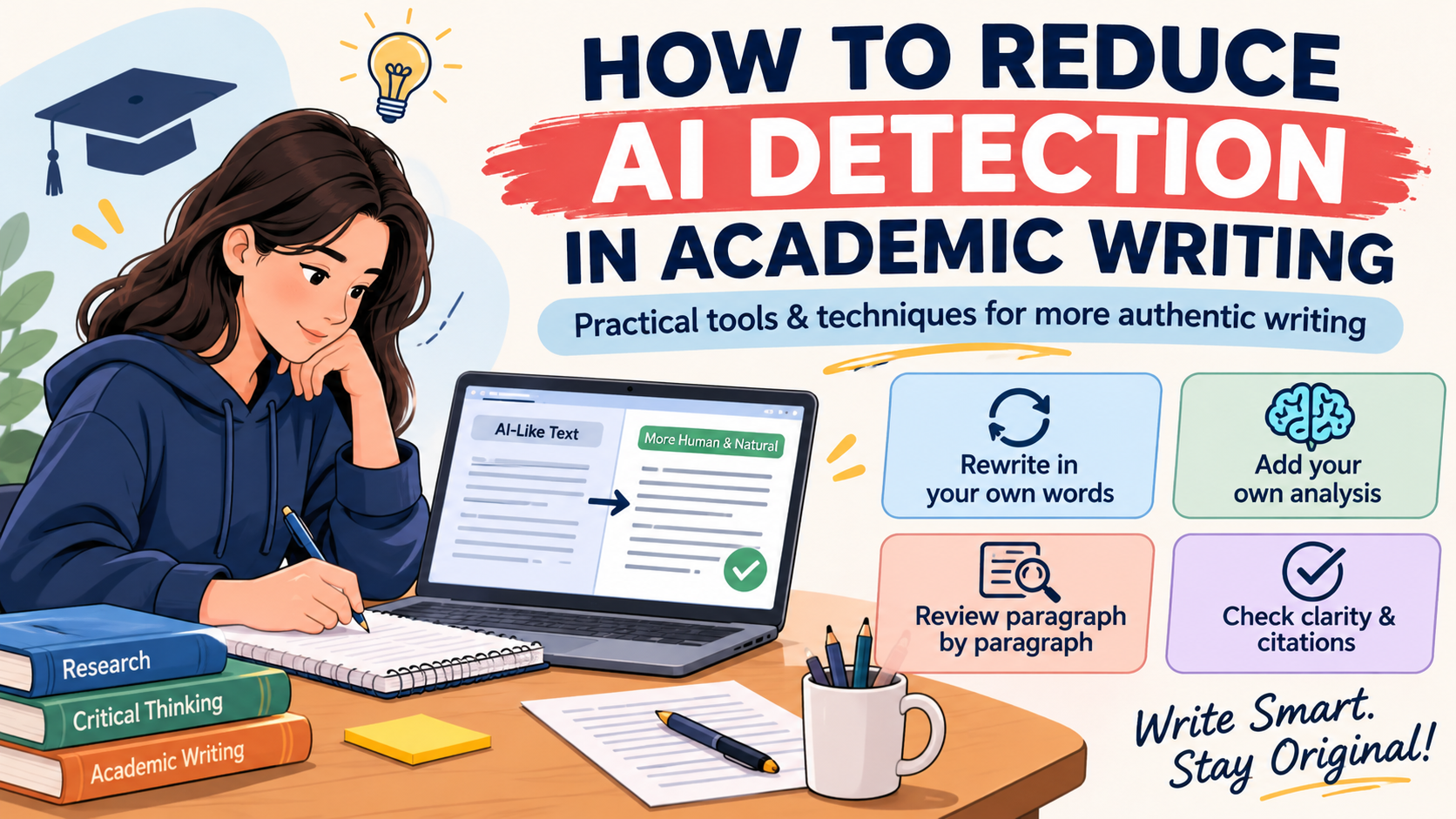
20 Nov 2026· 4 min read
How to Reduce AI Detection in Academic Writing: Tools and Techniques Students Can Use
AI tools have become a part of academic writing, helping students brainstorm ideas, structure assignments, summarise research and improve grammar. However, with universities and publication houses increasingly using AI detection tools, students are also becoming concerned about how their submissions are evaluated. A high AI detection score doesn't necessarily mean a student has cheated. AI detectors can make mistakes, and even Turnitin acknowledges that its AI detection may misidentify human-written or AI-written text.

4 Nov 2026· 6 min read
Using AI in Your Academic Work: A Practical Guide for Students Worldwide
AI tools are now part of how students research, plan and write. Used well, they cut weeks of friction out of academic work. Used badly, they put your degree at risk. This guide covers how to get the speed without giving up the authenticity of your work.
10 Mistakes That Turn a B Essay Into a C
10 Mar 2026· 2 min read